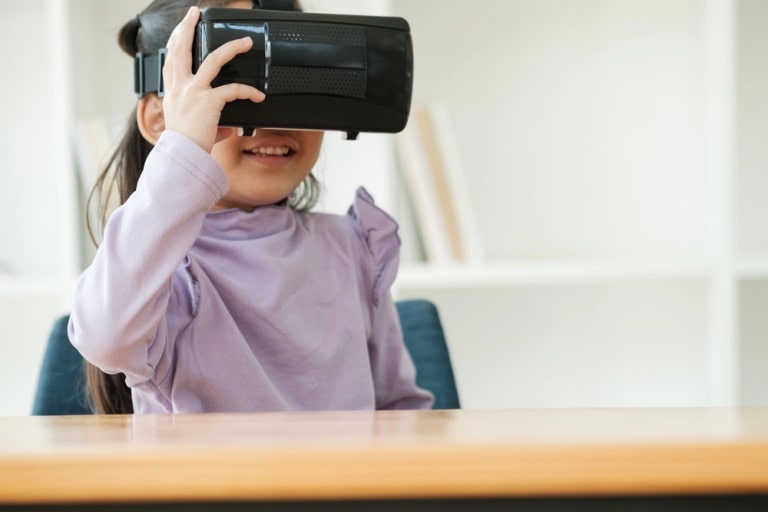
Augmented Reality (AR) is reshaping the way students engage with lessons by blending digital content with real-world environments. Unlike conventional methods that rely heavily on textbooks or static visuals, AR creates immersive and interactive learning experiences that capture attention and understanding.
From visualizing complex scientific concepts to exploring historical sites virtually, AR allows learners to interact with information in meaningful ways. This innovative approach not only boosts curiosity and motivation in students but also supports diverse learning styles.
In this article, we will learn how AR is emerging as a transformative tool and is making education dynamic, engaging, and effective for students.
AR Tools That Simplify Complex Subjects
AR tools are proving invaluable in simplifying complex subjects for students across various fields. By turning abstract ideas into interactive 3D models, AR makes learning more accessible and engaging.
According to Future Market Insights, Google leads the market with a share of 20-25%. Microsoft, with 15-20% market share, offers immersive learning solutions through HoloLens and AI-driven mixed reality applications. Meta focuses on virtual reality-powered learning experiences using Oculus devices.
These immersive tools bridge the gap between theory and practice for learners to grasp challenging material with ease. It breaks down intricate subjects into interactive, visual experiences.
The Fine Line Between Engagement and Exploitation
Interactive design plays a powerful role in capturing students’ attention and improving focus. However, it can also cross ethical boundaries if not applied responsibly. A clear example is highlighted in the TruLaw Fortnite case information, where the game’s design encouraged addictive behaviors, particularly among minors.
The Fortnite case highlights that its excessive gameplay has been linked to serious issues such as anxiety, depression, and social isolation. It has also been associated with repetitive strain injuries, sleep disruptions, and even poor academic performance. This demonstrates how interactive elements, when misused, can shift from engagement to exploitation with harmful consequences for young users.
In contrast, AR in education takes a healthier approach by using interactive design to support meaningful learning outcomes. Fostering interactive learning enhances lessons, encourages curiosity, and fosters skills that benefit students academically and personally. It ensures engagement remains purposeful and balanced.
Active Participation Through Interactive Learning Lessons
AR encourages students to actively participate rather than passively absorb information. By engaging with 3D simulations, virtual environments, and hands-on digital activities, learners become part of the lesson itself.
A study by ResearchGate was conducted to examine the impact of AR technology on teaching English to small kids aged 4,5, and 6. The kids learning through conventional methods increased their vocabulary level by 25%, 17%, and 24% for 4, 5, and 6 years, respectively. Whereas the kids learning through the AR app increased their vocabulary by 78%, 38%, and 73%.
Active participation ensures students retain knowledge longer and fosters collaboration among peers. It also creates a dynamic classroom environment where curiosity and creativity drive the interactive learning process forward.
AR Solutions for Diverse Learning Styles
AR offers versatile solutions that cater to diverse education styles, ensuring every student can engage effectively with lessons. Visual learners can take advantage of interactive 3D models and animations, while auditory learners can pair AR experiences with guided explanations.
Kinesthetic learners thrive when they physically interact with digital objects, turning abstract concepts into hands-on experiences. Even collaborative learners gain from shared AR environments that promote teamwork and discussion. AR enables educators to create inclusive classrooms where all students can engage.
Greater Access to Experiential and Interactive Learning
AR expands access to experiential and interactive learning by bringing real-world experiences into the classroom. This hands-on exposure allows them to apply theoretical knowledge in practical contexts, reinforcing a deeper understanding.
MDPI notes that the most widespread application of AR is through mobile apps. Unlike virtual reality (VR), it doesn’t require costly hardware, making it more accessible. With 73% of teens owning a smartphone, AR can reach most of its target audience. This technology makes AR-enabled textbook illustrations alive on a phone.
Unlike traditional teaching methods, AR removes barriers to experiences that might otherwise be impossible. Industries like healthcare, engineering, architecture, and design are increasingly adopting AR technologies.
Career Readiness Through AR Skills
Augmented Reality (AR) is not only transforming classrooms but also preparing students with skills essential for future careers. Students familiar with these tools gain a competitive edge in most industries.
For instance, Fortune Business Insights reports that the healthcare industry is increasingly adopting immersive technologies to assist medical professionals. These tools create realistic, interactive environments that enhance task efficiency. Previously, performing complex surgeries with limited information was challenging and exhausting, but with AR, surgical risks have decreased.
Through interactive simulations and problem-solving tasks, students learn to apply knowledge in real-world scenarios, mirroring workplace demands. AR also nurtures creativity, adaptability, and technical proficiency.
Frequently Asked Questions
Is AR affordable for schools with limited budgets?
AR can be affordable for schools with limited budgets, especially with mobile-based apps and cost-effective tools. Many AR platforms work on existing devices like tablets or smartphones. Additionally, free or low-cost educational AR apps are available, making integration practical without overwhelming school resources.
How do teachers get trained to use AR tools effectively?
Teachers often receive training through professional development workshops, online courses, or vendor-led tutorials. Many platforms also provide built-in guides and support resources. Schools may encourage peer collaboration, where experienced educators mentor others. This ongoing training ensures teachers can confidently integrate AR into lessons.
Can AR be used in remote or online learning environments?
Yes, AR can be effectively used in learning environments through apps and web-based platforms accessible on mobile devices. Students can interact with 3D models, simulations, and virtual experiences from home. This makes lessons engaging, interactive, and immersive, even outside traditional classrooms.
The Future of Learning with AR
Augmented Reality is redefining education by making lessons more immersive, inclusive, and impactful. From simplifying complex subjects to preparing students for future careers, AR bridges the gap between theory and practice.
Its adaptability supports diverse learning styles and ensures greater access to interactive learning experiences. As technology continues to advance, AR stands as a powerful tool that empowers students, enhances engagement, and shapes the future.
