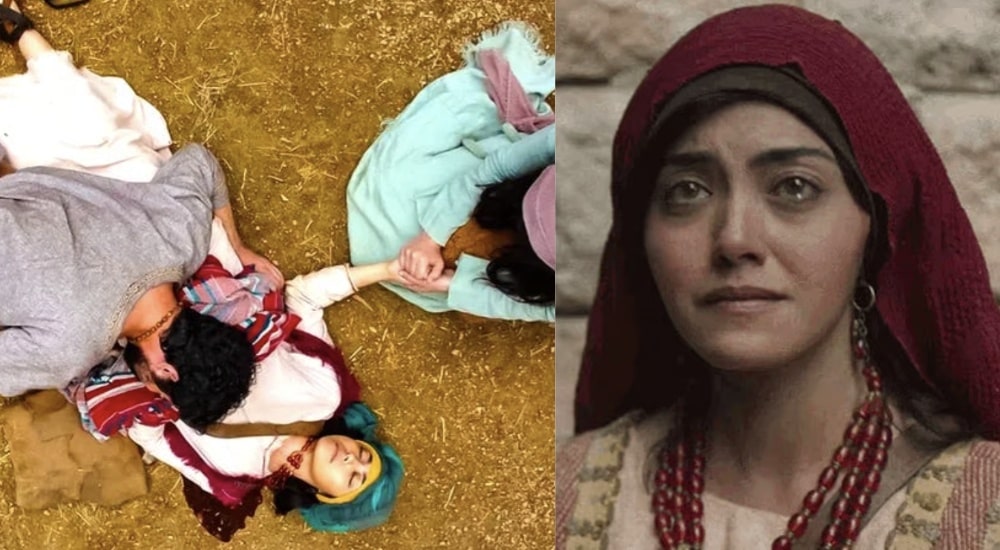
If you just finished watching The Chosen Season 4, Episode 3, you are probably staring at your screen in disbelief. You might feel like you’ve been punched in the gut. You are not alone.
The search term “Ramah The Chosen” is trending right now not because people are looking for her backstory, but because thousands of fans are collectively processing a massive trauma response. Ramah—the wine-loving, math-whiz joy of the group—is dead, struck down by Quintus.
And Jesus, standing mere feet away, did not stop it.
I’ve spent the last few days lurking on the subreddit, reading through hundreds of comments on threads like “Killing Ramah was one of the worst decisions I’ve ever seen,” and honestly, I get the anger. But after sitting with it, and looking at where the story is heading, I have to admit something difficult: While this was the show’s cruelest moment, it might also be its narrative masterpiece.
Here is why Ramah’s death is the key that unlocks the rest of the Gospel story.
The Reddit Backlash: Is This “Fridging” or Storytelling?
Let’s address the elephant in the room. The reaction online has been visceral. On Reddit, fans are furious. Many are accusing the writers of “fridging”—a trope where a female character is killed solely to motivate a male character’s (Thomas) character arc.
I understand that frustration. Ramah was a fan favorite. She was an original character (not in the Bible), which means the writers had total control over her fate. They built up this beautiful, slow-burn romance between her and Thomas, teased a wedding, and then ripped it away. It feels like a betrayal of the unwritten contract we thought we had with the show: If you follow Jesus, you are in the “safety zone.”
But that’s exactly why this plot point hits so hard. It shatters the prosperity gospel idea that proximity to God guarantees a happy life. As much as I hated watching it, it forced me to confront a harsh reality: bad things happen to faithful people.
Killing Ramah was one of the worst decisions I’ve ever seen in a tv show
byu/Geaux_whodat2009 inTheChosenSeries
The Origin of “Doubting” Thomas
For years, I’ve read the Bible and viewed Thomas as a bit of a pessimist. He’s the guy who, after the Resurrection, stubbornly says, “Unless I see the nail marks in his hands and put my finger where the nails were… I will not believe.”
I used to think he was just being difficult or overly logical.
But watching Thomas cradle Ramah’s body changed everything for me. This plotline provides the missing emotional context for Thomas’s future skepticism. When Thomas doubts later, it won’t be out of intellectual pride; it will be out of trauma.
Think about it from his perspective: He begged Jesus to save her. He knows Jesus can do it—he’s seen the miracles. But in his moment of greatest need, Jesus said, “It is not time.”
If I were Thomas, I would have trust issues too. This tragedy transforms “Doubting Thomas” from a skeptic into a survivor protecting his own heart. When he later hesitates to believe in the Resurrection, he’s essentially thinking: If You could conquer death, why didn’t You do it when it mattered to me? It makes his eventual restoration so much more powerful.
The Theological Risk: When God Says “No”
The most controversial aspect of this scene isn’t Quintus’s sword; it’s Jesus’s silence.
There is a lot of debate online asking, “Why did Jesus raise Lazarus but let Ramah die?” It feels arbitrary. It feels cruel.
But this is where The Chosen is taking a massive theological risk that I respect. We are moving away from the “fun” season of miracles and into the shadow of the cross. The show is forcing us to grapple with the Mystery of Sovereignty.
If Jesus healed everyone and saved every disciple from death, the Gospel would just be a transaction. Ramah’s death establishes a painful truth: Jesus came to defeat death ultimately, not to prevent every death immediately.
Watching Jesus cry while holding Thomas was a profound moment for me. It showed that His refusal to intervene wasn’t due to a lack of care, but a submission to a timeline that we can’t see. It’s the “Theology of Suffering” in action, and it’s incredibly hard to watch.
The Real-World Logistics
We also have to be realistic about the production side of things. Yasmine Al-Bustami, the actress who played Ramah, became a series regular on NCIS: Hawai’i. Scheduling conflicts often dictate the fate of TV characters.
The writers had two choices: send her away on a mission (which would feel weak for a couple about to get married) or use her exit to raise the stakes. They chose the latter. It was a functional decision that they managed to weave into the spiritual DNA of the show.
Final Thoughts
We are searching for “Ramah The Chosen” because we are grieving. We are grieving a character we loved, and we are grieving the loss of the “feel-good” vibe the show used to have.
But this tragedy signals that the kid gloves are off. The road to Jerusalem is paved with loss. Ramah’s death hurts, but it has given Thomas a depth I never saw coming, and it has challenged my own faith in a way few TV shows ever have.
So, yes, I am still mad at the writers. But I’m also glued to the screen to see how Thomas—and Jesus—pick up the pieces.
